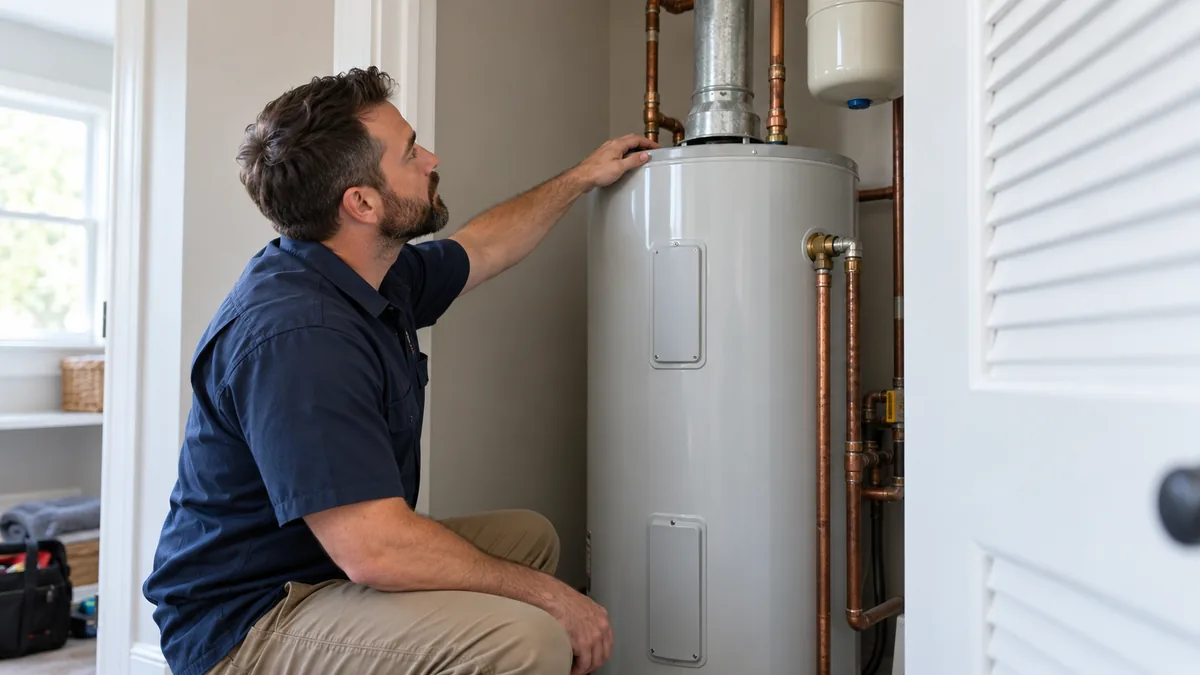
Changes in Hot-Water Temperature
Look at the pattern, not just one cold shower
Hot water that runs out sooner than usual may reflect increased demand, a control problem, a heating-component fault, or another system issue. Alternating hot and cold water can also involve a mixing valve or fixture. Check whether the change affects every hot tap or only one location.
Write down when the problem occurs and whether someone is using hot water elsewhere. This helps distinguish a single-fixture complaint from a wider supply problem. Do not open covers, change wiring, or repeatedly reset controls to make an unreliable heater keep operating.
Water Around the Heater Needs a Source Check
A puddle near a heater does not prove that the tank itself is leaking. Water can come from a connection, valve, condensation, or a nearby appliance. Without touching hot equipment, look from a dry, safe position for the highest visible point of moisture.
Note whether the water appears only during operation or continues to collect. Keep clear of relief-valve discharge, which may be dangerously hot. A provider should explain whether the source is an external component, an installation issue, or tank damage before proposing a repair or replacement.
New Sounds or Discolored Hot Water
Rumbling, popping, or other new sounds can accompany deposits or operating faults, but sound alone is not a diagnosis. Tell the provider whether the noise is new, growing louder, or associated with temperature changes. Maintenance procedures depend on the specific unit and its condition.
Compare hot and cold taps if there is discoloration, without drinking water of uncertain quality. Discoloration at both may have a source beyond the heater; a hot-water-only pattern gives a different clue. Contact the utility or a provider as appropriate instead of assuming that flushing the tank will solve it.
Safe Information to Gather Before a Visit
If the label is visible without moving equipment or entering a wet area, record the model, fuel type, and whether the unit stores hot water or heats it on demand. Describe visible moisture, temperature changes, and previous work. Photos from a safe distance can help explain the layout.
Keep the area accessible and ventilation openings clear. Do not remove a burner assembly or energized panel to obtain information. A tankless unit may show an error code externally; record it and consult its manual, but avoid using internet reset sequences as a substitute for finding the fault.
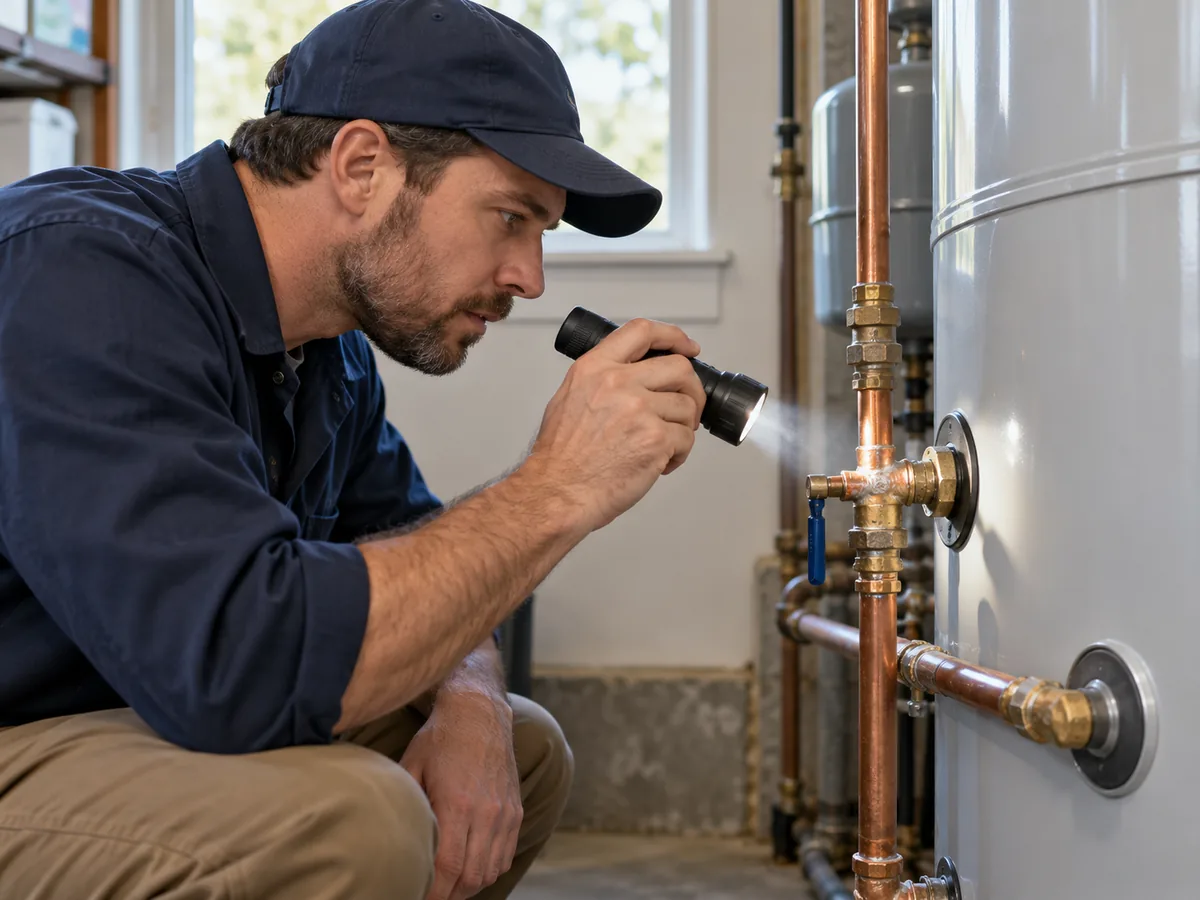
Gas, Electricity, Pressure, and Scalding Hazards
A suspected gas leak is a reason to leave the building, not investigate the heater. Avoid operating switches or creating ignition sources and contact the gas utility or emergency services from outside. Do not use a plumbing referral as the first response to immediate danger.
Stay away from wet electrical components and do not stand in water to operate equipment. Never plug or block a temperature-and-pressure relief valve. Unexpectedly scalding water or unusual discharge also needs prompt assessment. Ask a qualified professional about safe temperature control and scald prevention for your household.
Repair or Replacement: Questions That Matter
A replaceable external fitting or component may call for a different decision than a damaged tank. Ask what failed, how that was established, and whether the proposed work addresses the cause. Age is useful context but does not replace a condition assessment.
If replacement is recommended, discuss household demand, available space, energy source, venting or electrical requirements, warranty, and the work needed to complete the installation. Compare the whole scope, including disposal and any necessary upgrades. No single appliance type is automatically the best choice for every home.
Arrange Help With a Clear Scope
Ask whether the provider services your heater type and fuel source before scheduling. Some businesses handle tankless systems or specific brands; others do not. Confirm diagnostic charges, how additional work is authorized, and what is included if a part must be ordered.
A useful estimate separates the diagnosis, proposed parts or appliance, installation tasks, and any exclusions. Confirm who will restore disturbed finishes and explain operation afterward. Keep records of the symptoms and completed work so that a recurring issue can be assessed with its history in view.
Frequently Asked Questions
Does no hot water mean the heater needs replacement?
No. Supply, controls, components, demand, or a fixture issue may be involved. A provider should identify the cause before recommending an appliance.
Can I repair a leak at the base myself?
The source may not be the tank. Avoid disassembly, hot discharge, and wet electrical areas; have the source assessed before attempting a repair.
Do tankless heaters need different servicing?
Yes. Their components and maintenance requirements differ. Confirm that the provider works on your unit and follows the manufacturer’s guidance.
What should I ask about cost?
Ask about assessment fees, parts, labor, installation needs, and exclusions. Prices depend on the problem and provider; this website does not set them.
Find Plumbing Help in Dalton, GA
Describe the hot-water symptoms and appliance details when seeking a provider connection. DaltonPlumber.com is an independent referral website, not a plumbing contractor; availability is not guaranteed.