Listen for the Pattern of Running Water
Continuous flow and occasional refilling are different clues
A continuous filling sound may mean the fill valve is not shutting off as intended or water is escaping while the tank fills. A toilet that periodically refills without being flushed may be losing tank water into the bowl. Neither pattern proves a single part is responsible.
Note whether moving the handle changes the sound, whether the bowl water ripples, and whether the issue began after a repair. Those details help a provider distinguish a linkage issue from a seal, valve, or adjustment problem. Avoid repeated flushing just to reproduce a symptom.
Look Inside Only if the Tank Is Safe to Access
If there is no leak or overflow and you can comfortably lift the lid, remove it carefully with both hands. Porcelain lids are heavy, slippery, and easily broken. Set it flat on a towel in a secure place, away from the edge of a counter or where someone might step.
Observe the mechanism without dismantling it. Toilet designs vary, including canister and dual-flush arrangements that do not use a traditional flapper. If the controls are unfamiliar, use the manufacturer’s instructions or leave further checks to a provider. Do not force parts to match a diagram for a different model.
Check the Handle and Chain Without Forcing Them
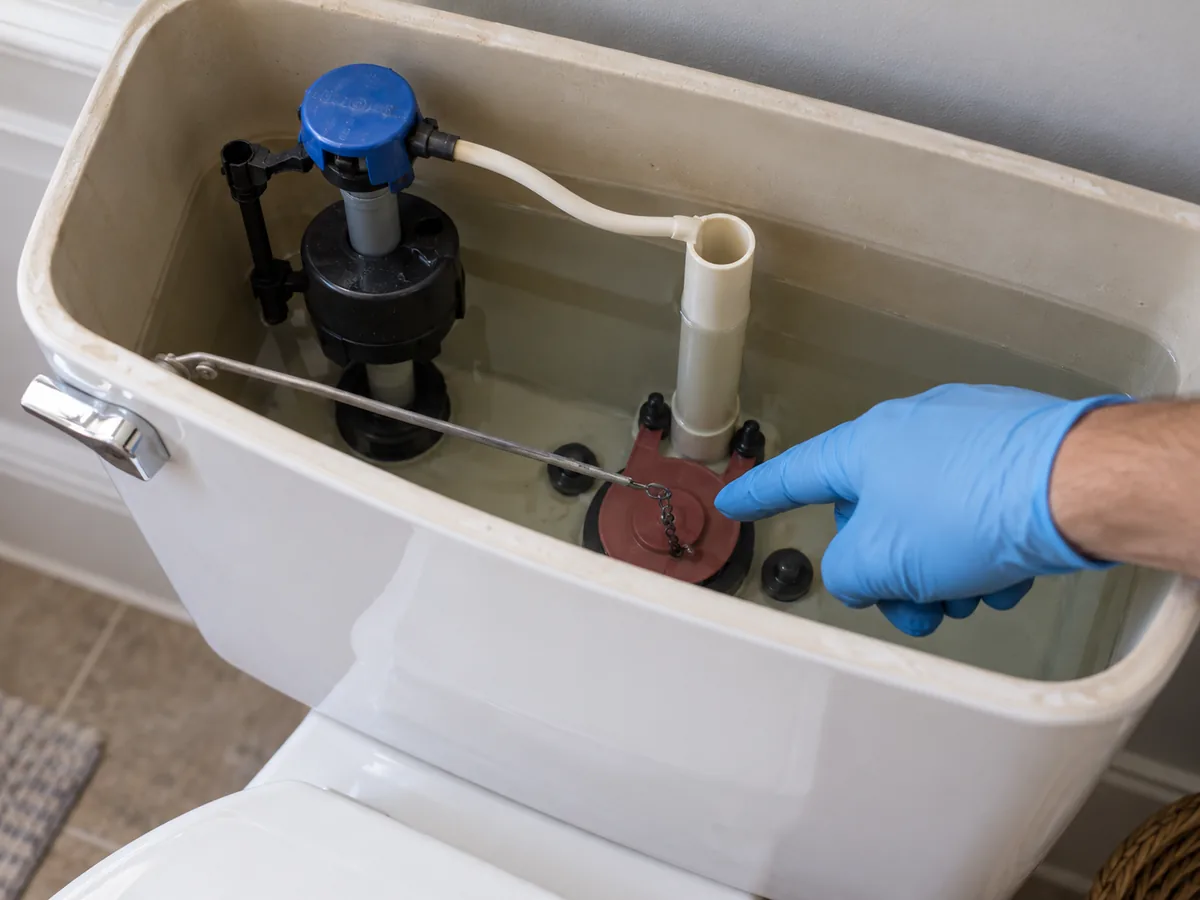
See whether the handle returns freely after a flush. On a traditional flapper system, a snagged or overly tight chain may hold the flapper away from its seat. A chain that catches on nearby components can make a problem intermittent, which is why a toilet may seem normal during one observation.
Do not pull hard on the linkage or bend parts to stop the noise. If a gentle return of the handle does not resolve the issue, record what you see. A compatible replacement or proper adjustment may be needed, but the correct arrangement depends on the toilet.
Understand the Flapper, Fill Valve, and Overflow
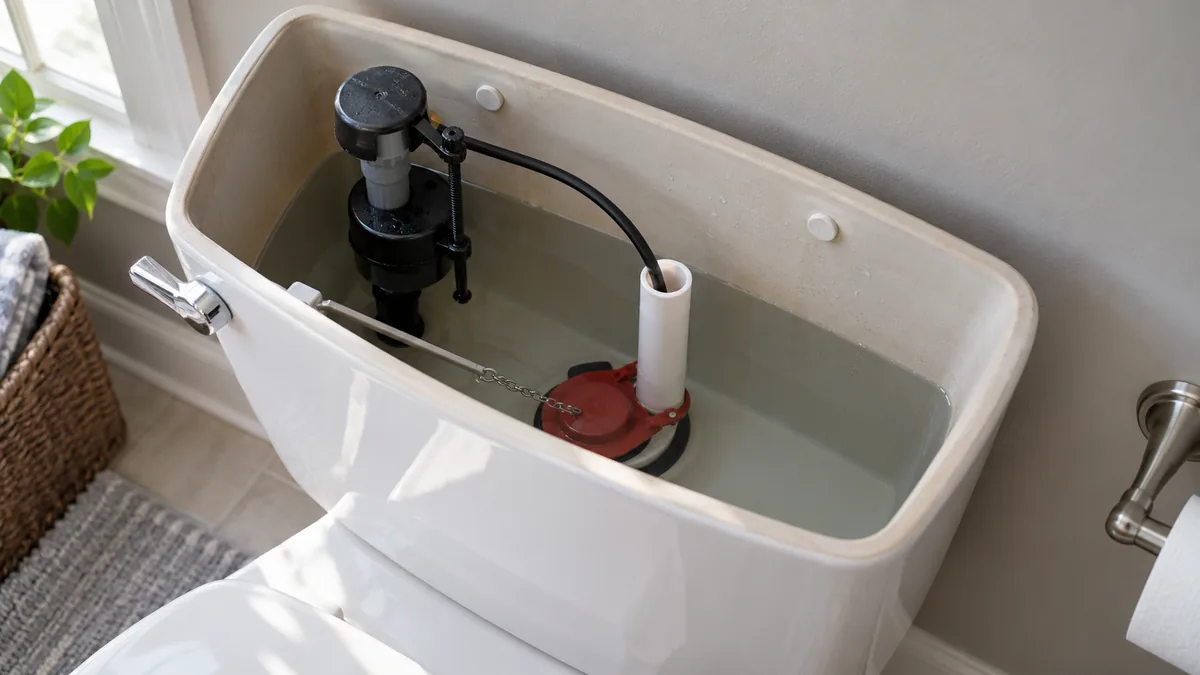
A flapper or flush-valve seal holds tank water until a flush. Wear or material trapped around its seat can let water enter the bowl. The fill valve replenishes the tank, while the overflow arrangement provides a route for excess water if the level becomes too high.
Look for water continuing into the overflow tube or a seal that does not appear to sit correctly. Do not assume that a new flapper will fit every toilet or that lowering a float solves the underlying problem. Parts, fill level, and linkage should follow the model’s requirements.
Separate Tank Running From Leaks and Backups
Water around the toilet base or supply connection is a different problem from water moving inside the tank. Stop using a toilet that leaks onto the floor and have the source identified. Condensation, tank connections, the supply line, or the base seal can produce similar puddles.
If the bowl is high or water comes up in a shower when the toilet flushes, do not keep flushing. That pattern can involve shared drainage. Keep people away from wastewater and explain which other fixtures are affected when seeking help, rather than continuing tank adjustments.
When to Use the Shutoff and Seek Assistance
Know where the toilet’s supply shutoff is, but use it only if the valve is familiar, reachable, and safe. Do not force a stuck or corroded valve. If shutting off a fixture does not control an active leak, the situation may require a different isolation point and prompt professional assessment.
Avoid overtightening tank bolts or supply fittings, since porcelain and components can be damaged. Do not add drain chemicals to address running water or a toilet clog. Tell a provider about any previous chemical treatment before they work on a blockage.
Choose Compatible Repairs and Better Habits
If replacement parts are proposed, ask how compatibility is established and whether the repair includes checking the toilet afterward. Keep the model information and repair record for future reference. Persistent refilling after work should be reported rather than accepted as normal operation.
Flush only toilet paper and human waste. Avoid placing objects where they can fall into an open tank, and use cleaning products according to the fixture manufacturer’s guidance. A periodic look for unexpected running sounds or fresh moisture can reveal a developing issue before it becomes a daily annoyance.
Frequently Asked Questions
Is a running toilet always caused by a flapper?
No. Handle linkage, fill-valve behavior, an overflow issue, or another seal may be involved. Some toilet designs do not use a conventional flapper.
Can I keep using it if the bowl drains normally?
Continuous running still wastes water and needs attention. Stop use if there is leakage, rising bowl water, or signs of a backup.
Should I tighten the tank bolts?
Do not overtighten bolts to investigate a running toilet. Cracked porcelain or damaged seals can result. A provider can identify the actual cause.
When should I call a plumber?
Seek help for persistent running, incompatible parts, a stuck shutoff, water on the floor, or any recurring backup involving other fixtures.
Find Plumbing Help in Dalton, GA
Describe the running sound, tank behavior, and any floor moisture when seeking a provider connection. DaltonPlumber.com is an independent referral website, not a repair company, and availability depends on the provider.